
5 Reasons to Pause a New Gift Product Before Sampling
A practical pre-sampling checklist for gift brands, retailers and importers developing custom products.
A new product idea can feel exciting.
A new shape.
A new material.
A different gift box.
Another accessory.
A new combination.
And once an idea starts to look promising, the natural next step often seems obvious:
Let’s make a sample.
But sampling is not always the right next step.
For gift brands, retailers, importers and private-label businesses, a physical sample can involve much more than the cost of one prototype.
It may also trigger packaging development, tooling, component sourcing, artwork preparation, supplier coordination and repeated revisions.
So before asking:
“Can we make this?”
there may be a more useful question:
“Is this idea ready to become a sample yet?”
At SHUNSTONE, we work on custom gift sets, barware, glassware, cocktail smoker kits and multi-material gifting products.
One lesson we have learned is simple:
Pausing early can sometimes save much more time and cost than correcting a weak concept later.
Here are five situations where a new gift product may be worth pausing before sampling begins.
1. Too Many Important Decisions Are Still Moving
A concept can look complete in a rendering while still depending on several unconfirmed decisions.
For example:
- the final glass size is still changing
- an accessory has not been selected
- the packaging structure depends on unfinished dimensions
- the decoration method has not been tested
- an important material has not been confirmed
- a key manufacturing process is still uncertain
If several core decisions are moving at the same time, producing a complete sample too early can create a chain of unnecessary revisions.
One component changes.
Then the insert changes.
Then the box dimensions change.
Then the artwork has to move.
Then another sample is required.
This does not mean every detail must be final before sampling.
Sampling is itself an important part of product development.
But the main product structure should be stable enough for the prototype to test a genuine direction instead of a moving target.
A useful question is:
What exactly do we need this sample to prove?
If nobody can answer that clearly, the project may need another development round before physical sampling begins.
2. Too Many New Processes Are Being Introduced at Once
Customization can create differentiation.
But every new process also introduces another variable that has to be sampled, tested, costed and controlled.
A single gift-set project might require:
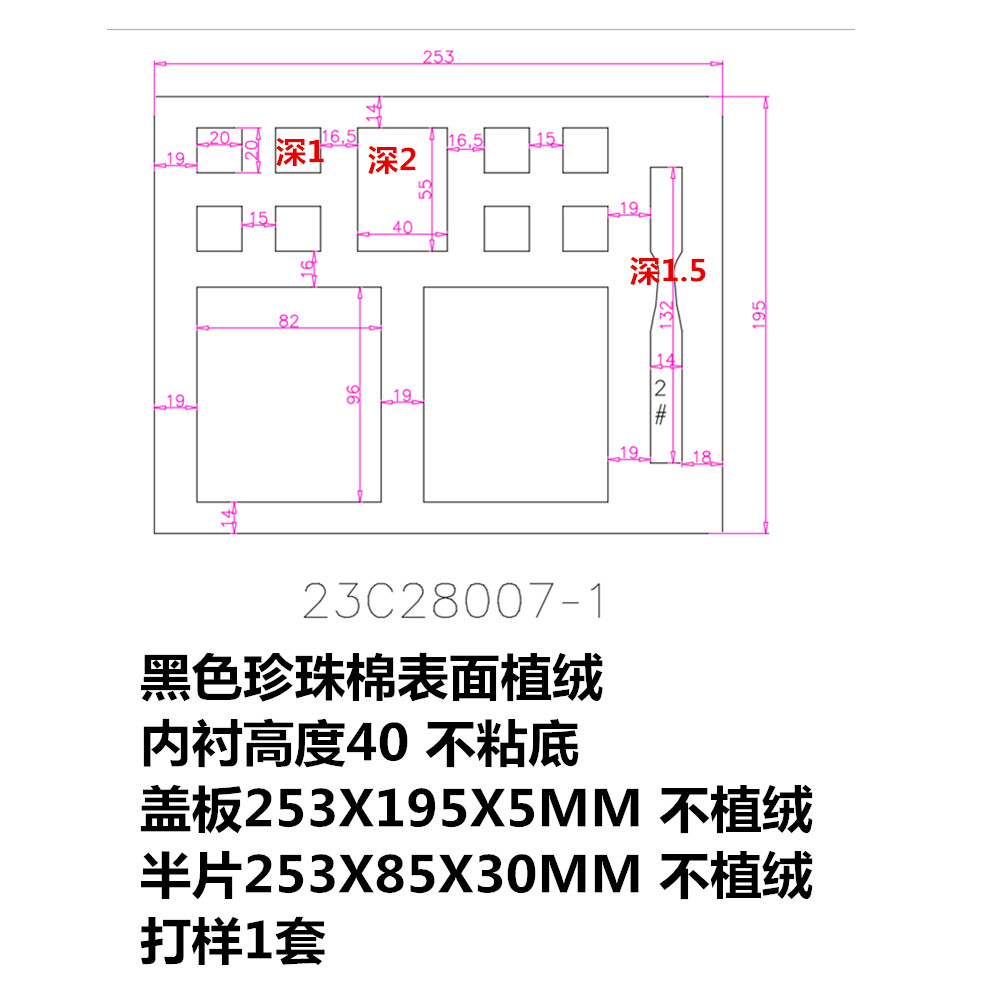
- a new glass mold
- a custom wood component
- a special metal accessory
- a new surface finish
- a molded insert
- a new gift-box structure
- custom printing or decoration
- additional assembly requirements
Every element may be technically possible.
That is not the same as saying the complete combination is commercially sensible.
When too many new processes are introduced at the same time, they can affect:
Development time + Tooling cost + MOQ + Lead time + Quality consistency
Sometimes a stronger first version starts from a proven product platform and introduces customization only where the customer will actually notice it.
That is not reducing creativity.
It is deciding:
Where does customization create enough value to justify the added complexity?
For an early-stage product, reducing unnecessary variables can make it much easier to understand whether the core idea is strong before more investment is added.
3. The Cost Structure Only Works on Paper
A product can look attractive while the complete commercial structure is still weak.
A concept may include:
- several accessories
- premium packaging
- custom decoration
- special materials
- multiple suppliers
- protective inserts
- additional assembly
None of these decisions may appear expensive on their own.
Together, they can change the economics of the entire project.
And factory cost is only one part of the equation.
Depending on the sales model, a buyer may also need to consider:
- master-carton efficiency
- freight
- warehousing
- fulfillment
- duties
- retail margin
- promotional allowances
- inventory exposure
This is why a product should not move into sampling simply because the estimated unit cost appears acceptable.
The better question is:
Does the complete product architecture still make commercial sense once the product is packed, shipped and sold?
If the answer is already doubtful on paper, a physical sample may only confirm a problem that could have been corrected earlier.
Sometimes changing one component, simplifying one finishing process or reducing packaging complexity can create a much healthier product before sampling begins.
For projects where the retail position is already known, we often prefer to work backwards from the target price rather than build the complete set first and reduce cost afterwards.
Read more:
Start With the Retail Price: A Smarter Way to Develop Whiskey Gift Sets for Retail
4. The Supply-Chain Complexity Is Greater Than the Customer Value
This is one of the easiest product-development risks to underestimate.
Many gift products combine different material categories:
Glass + Wood + Metal + Stone + Paper Packaging + Printed Accessories
That is manageable when the complexity creates enough value.
But complexity has a cost beyond the unit price.
It can also create:
- longer coordination time
- more tolerance issues
- more inspection points
- more assembly variables
- higher defect risk
- longer replenishment cycles
- greater dependence on individual components
Imagine one small accessory that contributes very little to the consumer experience but requires:
- another supplier
- another MOQ
- a separate finish
- an additional inspection
- additional packing work
That accessory may make the set look slightly fuller.
But commercially, it could make the product weaker.
So before sampling a multi-component gift set, it is worth asking:
Which parts create customer value—and which parts only create supply-chain complexity?
A product should earn its complexity.
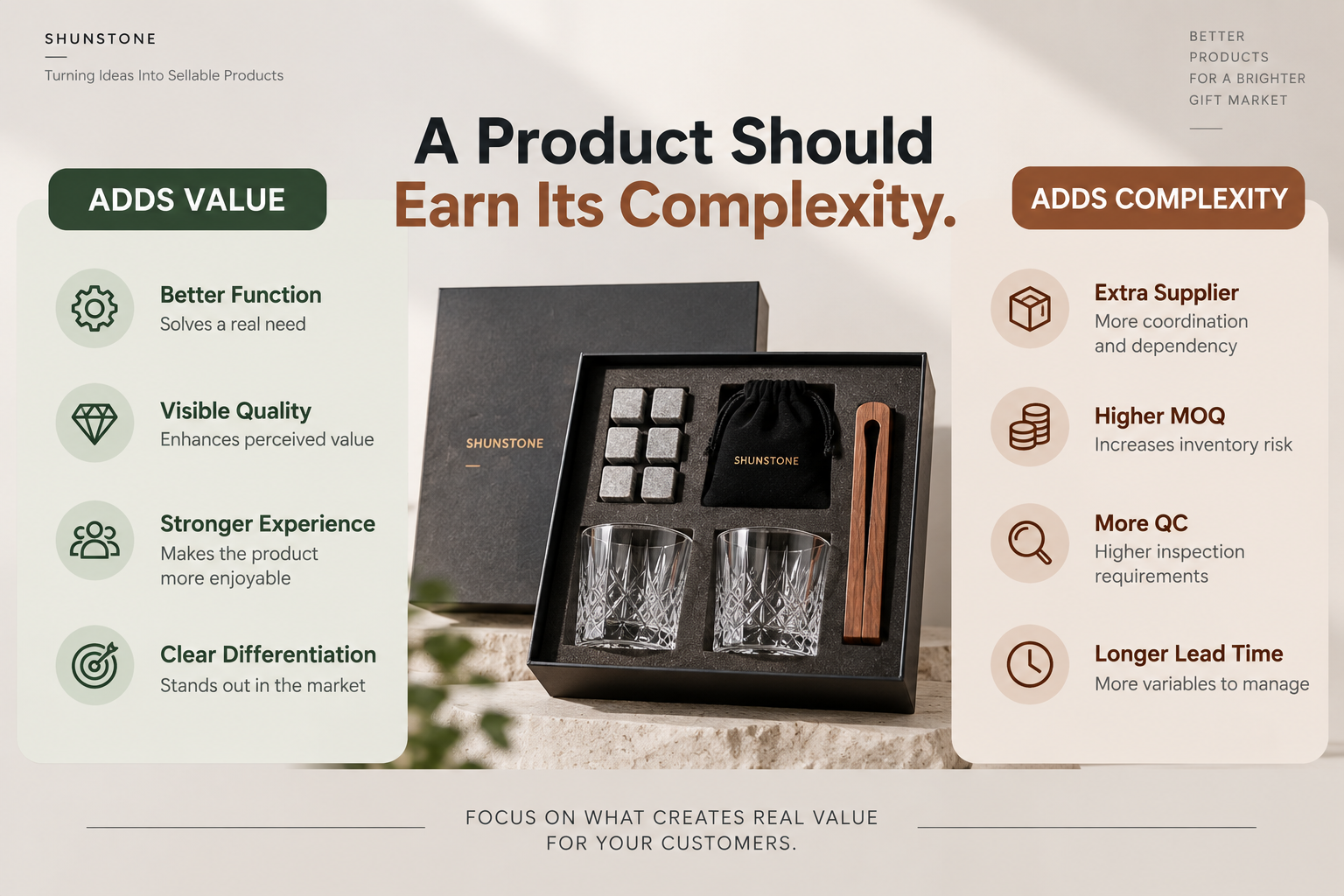
MOQ becomes part of the same decision.
A lower MOQ can reduce initial inventory exposure, while additional customization and multi-component sourcing can change the economics of the production run.
We discuss that relationship separately here:
The Right MOQ Depends on the Sales Channel
5. The Team Is Using Sampling to Solve a Strategy Problem
This may be the most important warning sign.
Sometimes the direction is unclear, so the response becomes:
“Let’s make a few samples and see.”
There are situations where comparative sampling makes sense.
But physical samples cannot solve every strategic question.
A new prototype will not automatically tell a team:
- whether another SKU is actually necessary
- whether an existing bestseller should be refreshed instead
- whether weak packaging is the real problem
- whether the product mix should be simplified
- whether an existing SKU could be repositioned
- whether a different sales channel would create a better opportunity
Sometimes the business does not need a completely new product.
It may need:
a better version of an existing product
or:
better packaging
or:
a stronger product combination
or:
a clearer retail proposition
or:
a different price architecture
This distinction matters.
New product development should solve a real commercial problem.
It should not become the automatic response whenever an existing collection starts to feel familiar.
For buyers who are already ready to move from concept toward a complete retail proposition, this related guide explains the broader process:
How to Develop a Retail-Ready Whiskey Gift Set
But sometimes the most valuable development decision comes before that stage:
Not yet.
What Should a Sample Actually Validate?
Before requesting another prototype, replace:
“Can the factory make this?”
with:
“What do we need this sample to prove?”
A sample can have several different purposes.
Function
Does the product actually work as intended?
Proportion
Do the components look and feel balanced together?
Material
Does the physical material support the intended quality and retail positioning?
Manufacturing Feasibility
Can the design be produced consistently rather than only made once for a prototype?
Packaging
Can the finished product be protected, packed and presented properly?
User Experience
Will the consumer understand how the product works?
Cost
Does the final configuration remain commercially realistic after the design becomes physical?
Once the purpose of the sample is clear, the prototype becomes a decision-making tool, rather than simply a physical version of an idea.
A Simple GO / PAUSE Checklist Before Sampling
Before investing in the next prototype, buyers can run a quick development check.
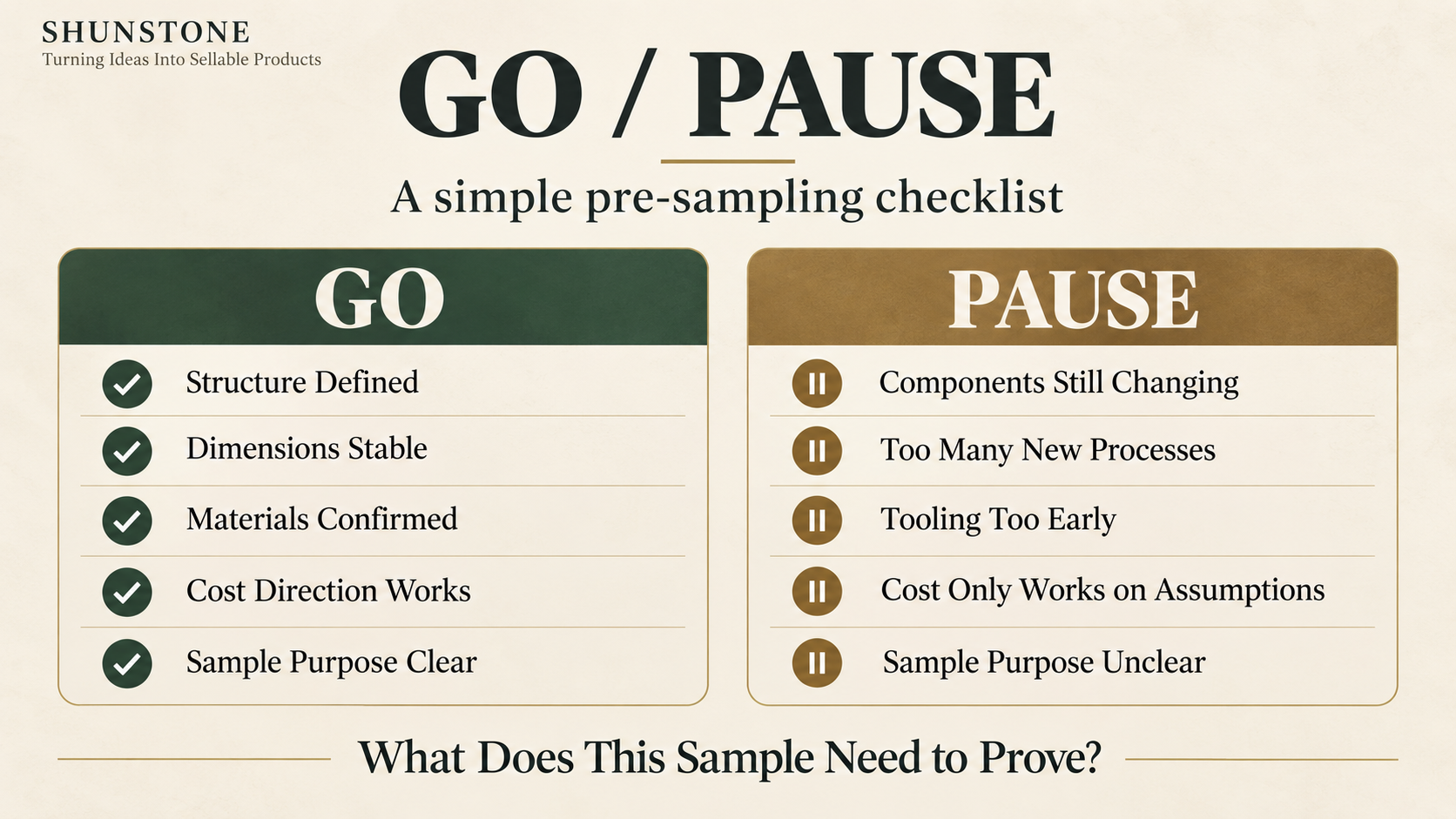
GO
A project may be ready to move forward when:
- the main product structure is defined
- critical dimensions are reasonably stable
- the major materials are confirmed
- the key customization points are understood
- the cost direction is commercially realistic
- the main supply-chain complexity is known
- the team understands what the sample needs to validate
PAUSE
Another development round may be useful when:
- important components are still changing
- too many new processes are being introduced at once
- packaging dimensions cannot yet be confirmed
- significant tooling is required before the core concept is validated
- the cost structure depends on optimistic assumptions
- a low-value accessory creates disproportionate complexity
- nobody can clearly explain what the next prototype is supposed to prove
Pausing does not mean abandoning the product.
It means improving the development brief before spending more money on execution.
Sampling Should Reduce Uncertainty
A good sample should answer questions.
It should reduce uncertainty.
It should help the buyer and supplier make better decisions about:
Materials
Dimensions
Structure
Function
Packaging
Cost
Production feasibility
If a prototype creates substantially more unanswered questions than existed before it was produced, the project may have entered sampling too early.
A more useful development sequence is:
Idea → Evaluate → Simplify → Sample → Review → Refine → Produce
That evaluation stage matters.
It can reduce unnecessary tooling, repeated packaging changes and avoidable sample rounds.
When the Right Product Is Not a New Product
There is another option buyers sometimes overlook.
A company may already have a product that works.
The better opportunity may not be replacing it.
It may be improving it.
That could mean:
- simplifying the packaging
- improving the internal insert
- upgrading one visible material
- removing a weak accessory
- creating a premium version
- creating a lower-cost version
- refreshing the decoration
- adapting the product for another channel
- creating seasonal packaging around an existing platform
This can sometimes create more commercial value than building another SKU from zero.
It may also reduce:
Development risk + Sourcing complexity + Inventory fragmentation + Replenishment complexity
So every new idea should compete against another question:
Could we create more value from something we already have?
That question is especially useful when a brand already has a successful product platform.
Product Development Is Also About Knowing When to Wait
Manufacturing capability matters.
But the fact that something can be manufactured does not automatically mean it should immediately become a sample—or a production order.
Good product development also requires restraint.
Sometimes the right next step is:
a prototype
Sometimes:
another costing round
Sometimes:
simplifying the structure
Sometimes:
reviewing the packaging
Sometimes:
improving an existing SKU
And sometimes the right decision is simply:
Not yet.
Because the objective is not to make more products.
The objective is to develop products with enough commercial logic to justify becoming real.
At SHUNSTONE, that is part of what we mean by:
Turning Ideas Into Sellable Products.
FAQ: New Gift Product Sampling & Development
When is a new gift product ready for sampling?
A new gift product is generally ready for sampling when its main structure, critical dimensions, major materials, customization direction and basic commercial assumptions are stable enough for a physical prototype to answer specific development questions.
The purpose of the sample should be clear before it is made.
Should the final product cost be confirmed before sampling?
Not necessarily.
Sampling can reveal changes that affect the final price, so every cost does not need to be fixed beforehand.
However, the expected cost direction should already be commercially realistic.
If the proposed configuration is clearly outside the acceptable cost structure before sampling begins, revising the concept first may save unnecessary development work.
Can a supplier help evaluate a product before sampling?
Yes.
An experienced OEM/ODM product-development partner can often help review product configuration, materials, manufacturing feasibility, packaging structure, likely MOQ constraints and production complexity before a physical prototype is produced.
The exact scope depends on the product and development requirements.
How can buyers reduce unnecessary sampling rounds?
Clearer specifications usually reduce unnecessary revisions.
Before sampling, buyers should confirm as much as reasonably possible regarding dimensions, materials, component selection, decoration, packaging direction and development objectives.
It is also useful to identify which elements are already fixed and which elements the prototype is specifically intended to test.
Is more customization always better for a private-label gift product?
No.
Customization creates value when it improves differentiation, usability, perceived value, functionality or brand relevance.
Adding processes that customers barely notice can increase tooling cost, MOQ, lead time and production complexity without creating enough additional product value.
What should buyers check when reviewing a gift-set sample?
Depending on the product, buyers may need to review:
- dimensions and proportions
- material quality
- functionality
- decoration
- component fit
- packaging structure
- internal protection
- product movement inside the box
- unboxing experience
- perceived value
- production feasibility
- estimated final cost
The sample should be evaluated against the commercial objective of the project, not only against its appearance.
Developing a New Gift Product?
SHUNSTONE works with gift brands, retailers, importers, distributors and e-commerce businesses on the development of:
Whiskey Gift Sets
Cocktail Smoker Kits
Custom Barware
Glassware & Decanter Sets
Whiskey Stones & Accessories
Golf & Game Gift Concepts
Multi-Material Gift Sets
Custom Packaging
Our development process can include:
Concept Review → Product Configuration → Material & Cost Evaluation → Sampling → Packaging Development → Production → Quality Control → Delivery
You do not necessarily need to begin with a finished specification.
Send us your concept, reference product, target quantity, target market and commercial requirements.
We can help evaluate the development direction before the project moves further into sampling and production.
Start Your Project
Post time: Sep-19-2026