
During my recent market research in the U.S., I found myself doing something I’ve done for years: picking products up and looking more closely.
I look at the shape. I feel the weight. I check the details, the packaging and how different products are presented together.
And I often ask:
“Why did they design it this way?”
A whiskey glass is a good example.
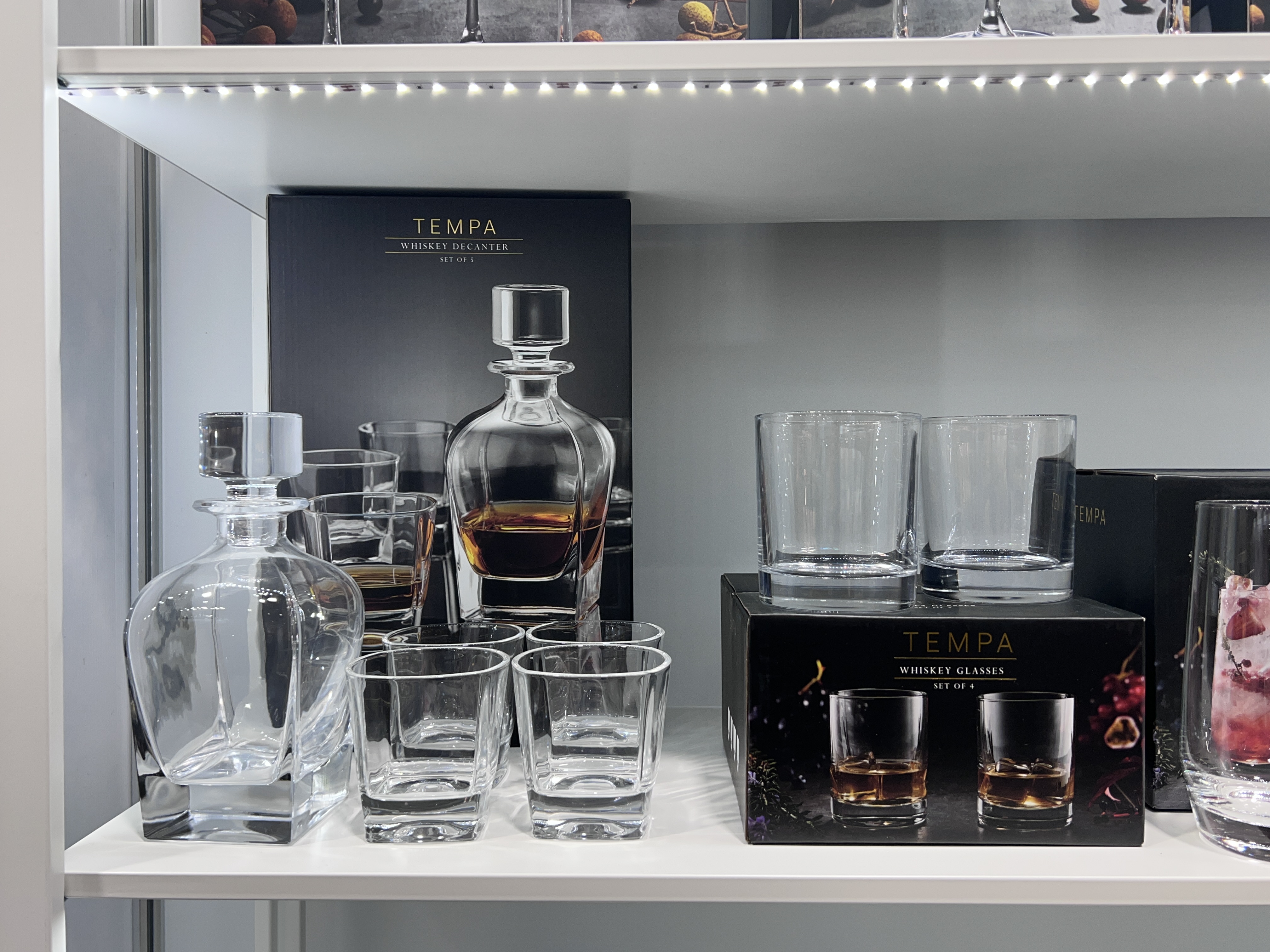
Two glasses may look similar from a distance, but once you look more closely, the decisions behind them become easier to see.
For buyers and product developers, evaluating a whiskey glass should go beyond:
“Does it look good?”
Here are five details worth considering.
1. Start With the Shape
Shape is usually one of the first things people notice.
Some buyers may prefer a familiar rocks-glass profile. Others may want a more distinctive form that gives the product a stronger identity.
But different does not automatically mean better.
The better question is:
What role should this shape play?
Is the whiskey glass intended as an easy-to-understand retail product? Is it supposed to become the visual focus of a gift set? Does it fit naturally with the rest of the collection?
For a custom whiskey glass, differentiation should have a reason—not simply exist for the sake of looking different.
2. Pick It Up: Weight and Balance Matter
Photography can show shape and appearance, but it cannot fully communicate how a glass feels in the hand.
When handling a whiskey glass, I pay attention to the relationship between the base, proportions and overall weight.
The point is not that heavier automatically means better.
The question is whether the physical experience matches the intended product positioning.
This is also why physical samples remain valuable during product development. Specifications provide dimensions and photos show appearance, but holding the sample gives buyers another way to evaluate the product.
3. Look at the Details
One habit I have during market research is turning products over and looking at areas that are easy to miss in a photo.
The base. The edge. The proportions. Surface details. How different elements work together.
For a whiskey glass, branding is another detail worth considering.
Where should the logo appear? How visible should it be? Should the product carry most of the branding, or should more of the brand identity live on the packaging?
A custom whiskey glass does not necessarily need branding on every available surface.
Sometimes a cleaner product, combined with more visible branding on the box or sleeve, creates a better balance between product and brand.
4. Evaluate the Glass as Part of the Gift Set
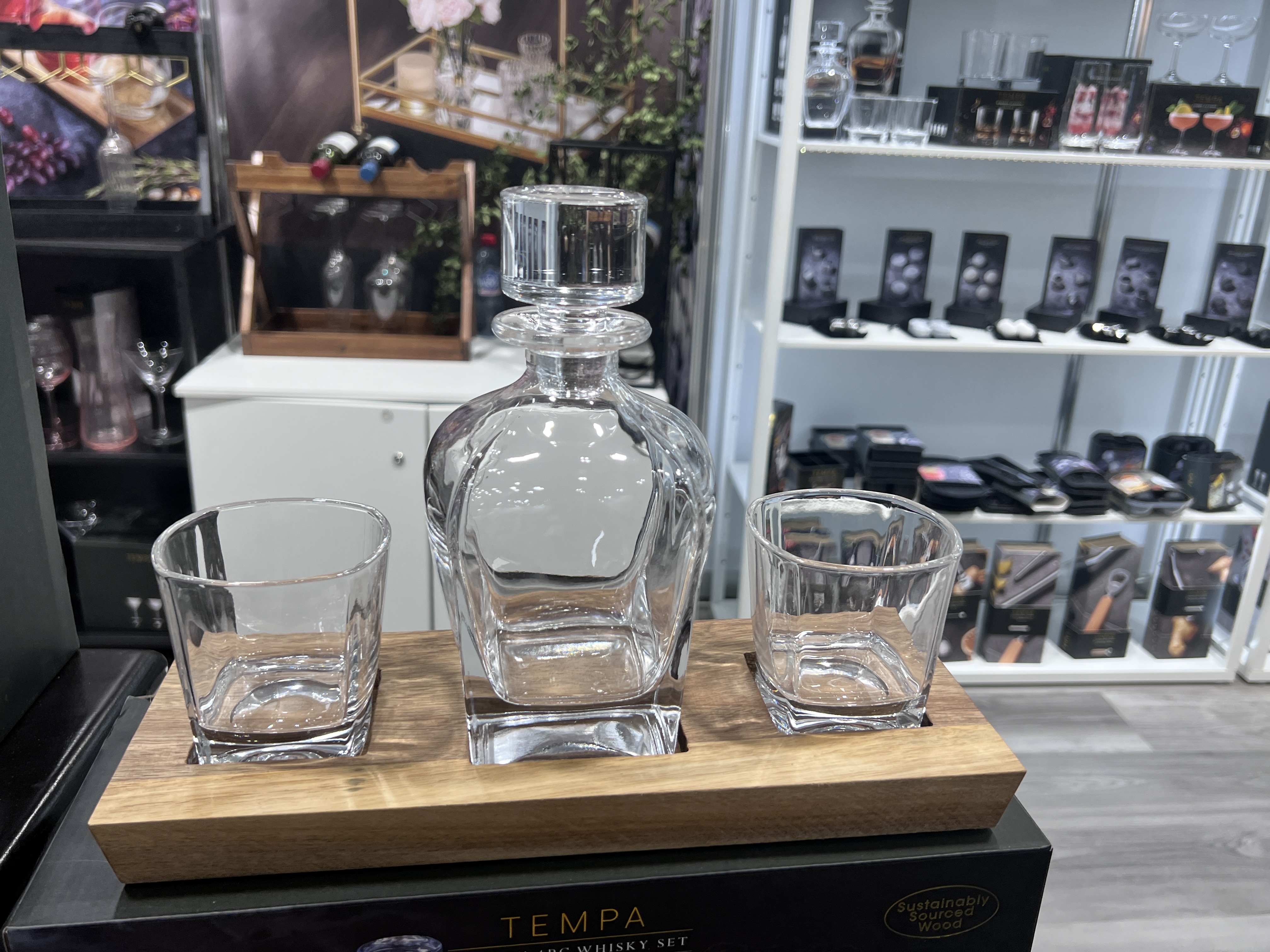
During U.S. market research, I also looked at how glasses were presented together with decanters and other components.
It is a useful reminder that a whiskey glass should not always be evaluated in isolation.
Inside a whiskey gift set, every component has a role.
If the glass is intended to be the hero product, does it give the set enough identity? Do the accessories support the experience? Does the complete configuration feel intentional?
The goal is not to include as many accessories as possible.
It is to create a whiskey gift set where each component has a reason to be there.
5. Don’t Forget the Packaging
Packaging changes how a product is understood before it is ever used.
For a whiskey gift set, this is particularly important.
Is the glass immediately visible when the box opens? Are the components organized clearly? Does the packaging structure support the products? Does the overall presentation make sense for the intended retail or gifting scenario?
Packaging should not always be treated as something added after product selection.
The glass, accessories, insert and outer packaging need to work together as one product presentation.
Market Research Is Also About Looking Outside the Category
During my U.S. market visits, I don’t only look at whiskey products.
Other glassware, home products and retail displays can also reveal useful ideas about shape, material combinations, merchandising and presentation.
The goal is not to copy another category.
It is to understand why certain product decisions work in a particular retail environment.
Sometimes that observation leads to a useful question for the next whiskey glass development project:
“What if we approached this differently?”
A Simple Checklist for Buyers
Before approving a whiskey glass, ask:
Shape: What gives the product its identity?
Feel: Do the weight and proportions make sense together?
Details: Which design or branding details actually add value?
Configuration: If it goes into a whiskey gift set, what role should the glass play?
Packaging: Does the packaging support the product and gifting experience?
These questions move the discussion from:
“Do we like this glass?”
to:
“Why does this product make sense for this project?”
That is a much more useful product-development conversation.
Developing Whiskey Glasses and Gift Sets With SHUNSTONE
SHUNSTONE works with overseas B2B customers on barware, drinkware and gift-ready product development.
Depending on the project, this can include product selection and configuration, OEM/ODM development, sampling and revision, packaging development, multi-material coordination, production follow-up and quality coordination.
If you are developing a custom whiskey glass or planning a whiskey gift set, a useful starting point is not simply:
“What else can we add?”
Instead, ask:
“What should this product do for the buyer, the sales channel and the gifting experience?”
Better product development often begins with better questions.
Post time: Aug-30-2026